
GT Design & Innovation
Triple Triangle
It’s iconic for a reason.
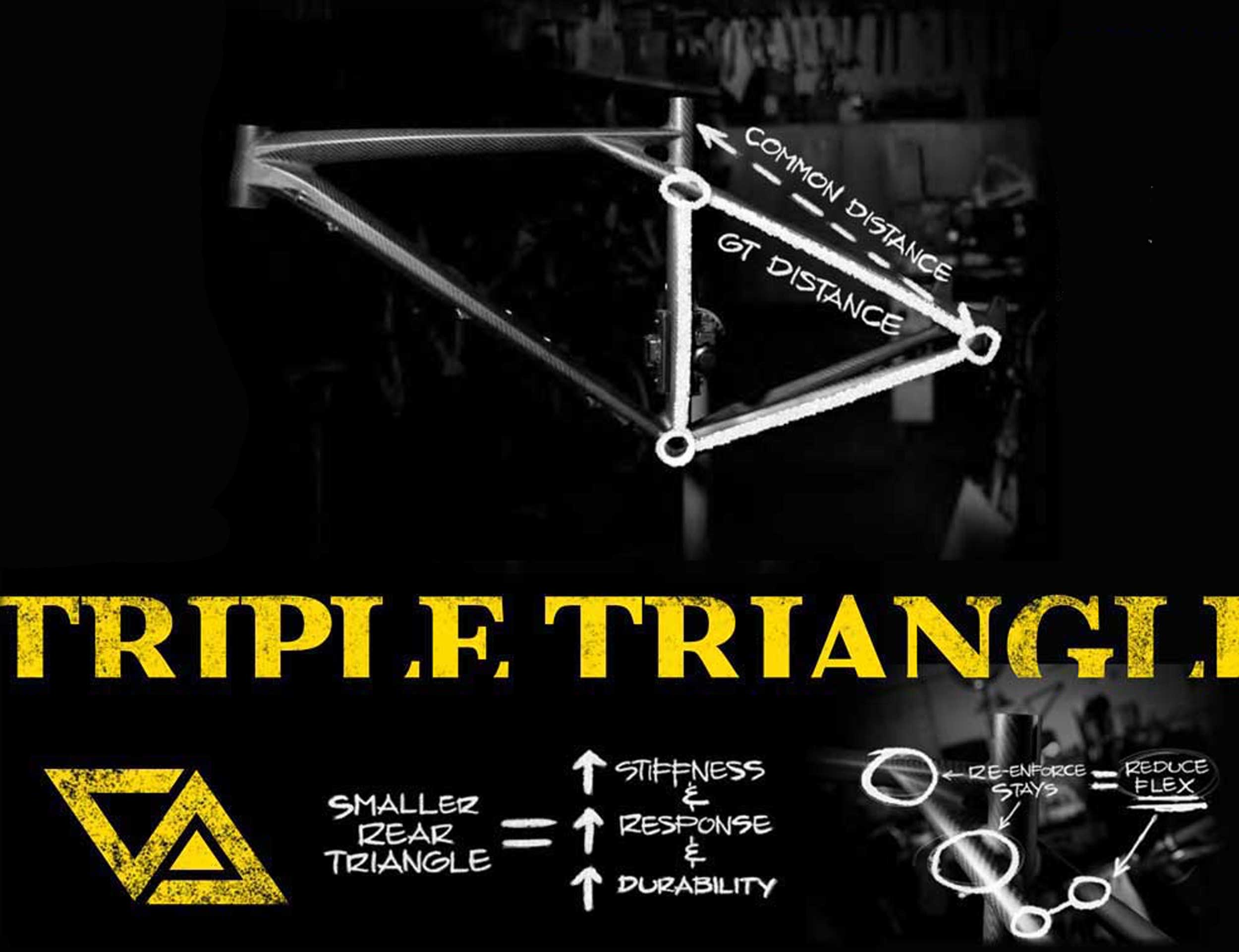
Nothing says more about who we are and our philosophy towards bike building than our Triple Triangle frame design. First introduced in 1988 to help reduce unwonted lateral frame flex and improve acceleration. In no time, Triple Triangle, gained global notoriety not only for its responsiveness, but also for its legendary durability. Notoriety quickly lead to iconic status, shortly after its introduction, a Triple Triangle frame became the first (and only) bike in the world to win a mountain bike world championship in both XC and downhill disciplines.
GT is triple triangle design frame takes advantage of smaller triangles and a new externally butted seat tube to increase strength and reduce flex. Our distinctive pierced and overlies to top tube provides more welding area in this critical high stress area. The internal cable routing system utilises a full length tube that is hand brazed inside the top tube for a clean, professional look. For 1990 we’ve added our heat-treated alloy seatpost clamp, eliminating the added weight of reinforcement collars and brazed-on seat tabs. While other companies have just discovered the benefits of oversize Seatstays, GT’s Triple Triangle design frame has always used double tapered 19 mm stays to add rigidity and eliminate break flex. Chosen as one of the 10 best inventions for mountain bikes in 1989, our GT cable Crosser shows the best ideas are sometimes the simplest.
At GT, bicycle design begins with a frame. Unparalleled attention is paid to the materials, geometry, and manufacturing techniques. For 1990, our triple triangle design offers improve geometry and an even lighter frame. Features you have come to expect, like our ovalized seat tube and internal cable routing, are now united with some brand-new ideas.
Our new oversize or O.S. Steering system spearhead the list of frame refinements. The OS system begins with GT’s handsome new pierced design stem. Chromemoly tubing and an alloy Wedge bolt allow maximum strength at the lightest possible wait. Our redesign fork uses an oversize steering column, adding measurable strength with no weight increase.
Beefy 1/18” fork blades minimise flex and offer plenty of tyre clearance. Capable of withstanding more reviews than a standard size, the new 1/18” headset completes the OS system. Red tube reinforcement colours, pioneered by GT bicycles, secure the anchor the OS system to your All-Terra frame.
Features such as these can be found throughout the GT line and once integrated with carefully selected, quality componentry, there can only be one serious choice – GT All-Terra.
Information coming soon!
Triple Trak Plus System
For 1991, GT introduces our Triple Trak Plus and Triple Trak steering systems. The Triple Trak Plus system offers the benefits of the GT flip-flop stem, GT 2x4 fork and Tioga oversized 1/18” chromoly headset with GT alloy double locknut. The Triple Trak system features 1/18” GT pierced design stem, 1/18” headset, and 1/18” new design chromoly fork with GT Bologna cut.
The 1991 design GT flip-flop stem is a marvel of innovation. With a single allen wrench, the handlebar assembly can be removed, completely intact, and stem extension can be flipped, giving the rider the choice of two different riding positions. Advantages to this design include: position change to reduce fatigue or to aid in aerodynamics; rider may pick one position to climb and another to descend; rider may use one position for street and the other for off road.
The 1991 design GT 2x4 fork is noticeably different from all others. using oversize 1/18 blades and an attractive bologna cut with a GT logo and cold forged adjustable offset dropouts, there is no mistaking the new GT 2x4 fork.
Given the fact that ATB and crossover bikes are ridden in such a variety of conditions, it was only natural to design a fork which would give the rider the ability to change the rake (offset), and thus, trail to the position which best fits the riding conditions for the riders ability. The adjustable axle position on the GT’s 2x4 fork allow the rider the freedom to do so.
Bicycle “feel” is very personal and to be fully aware of the handling characteristics available with a GT 2x4 adjustable fork, the rider should experiment with all the provided axle positions and determine which position suits them best.
The 1991 design GT alloy double locknut the headsets is a simple solution to an old problem loose headsets. This special design has an independent upper locknut that threads into and hold securely, the primary headset locknut. Easy to use and to adjust, with no extra fork column required, this locknut holds proper headset adjustment in even the most aggressive conditions. The GT alloy double locknut combined with a new lightweight Tioga chromoly headset is standard on all bikes with a GT Triple Trak plus steering system.
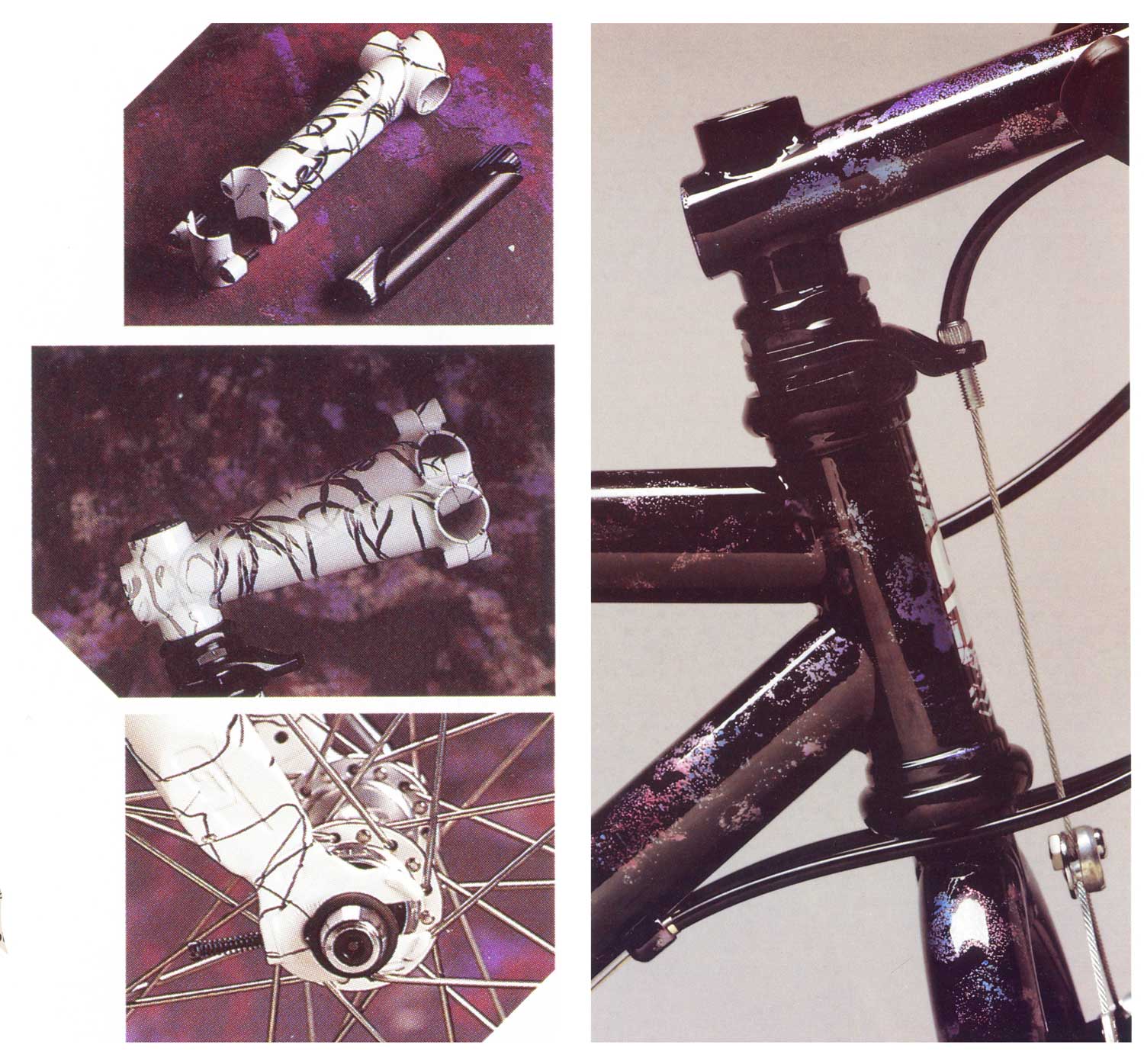
FLIP FLOP STEM
The Flip-Flop Stem is one of the innovative components introduced by GT Bicycles during the 1990s, showcasing the brand’s commitment to offering riders customisable and versatile options. The Flip-Flop Stem was designed to provide riders with the ability to easily adjust their bike’s handlebar height and reach, catering to different riding styles and preferences without the need for multiple components or extensive adjustments.
The Flip-Flop Stem was a simple yet clever piece of engineering. It was designed with two possible orientations: one that provided a more aggressive, lower riding position, and another that offered a more upright, comfortable stance. By simply flipping the stem over, riders could alter the handlebar height and angle, effectively changing the bike’s geometry to better suit either high-speed racing or more relaxed, endurance-focused rides. This versatility made the Flip-Flop Stem particularly appealing to riders who used their bike in a variety of settings, from cross-country trails to competitive racing.
In its lower position, the stem provided a more forward and downward handlebar angle, which was ideal for aggressive riding. This setup helped riders achieve a more aerodynamic position, reducing wind resistance and allowing for more efficient power transfer during sprints and climbs. It also placed more weight over the front wheel, improving traction and control in technical sections.
When flipped, the stem offered a more upright position, which was better suited for longer rides or less aggressive terrain. This position reduced strain on the rider’s back and shoulders, making it easier to maintain comfort over extended periods. The higher handlebar position also improved visibility and control, particularly on steep descents or when navigating obstacles.
The Flip-Flop Stem was a reflection of GT’s philosophy of adaptability and rider-centric design. It provided a straightforward solution to a common issue—how to quickly and easily adjust a bike’s fit and handling characteristics. By offering this level of customisation, GT enabled riders to fine-tune their bikes without the need for additional parts or tools, enhancing the overall riding experience.
This innovation was particularly popular among mountain bikers who needed to adapt their bikes to different terrains and riding conditions. Whether preparing for a fast-paced race or a leisurely trail ride, the Flip-Flop Stem allowed for quick adjustments that could significantly improve performance and comfort.
Today, the Flip-Flop Stem is remembered as a practical and ingenious solution that embodied GT’s innovative spirit during the 1990s. It stands as an example of how thoughtful design can enhance a bike’s versatility, making it more adaptable to the diverse needs of riders.
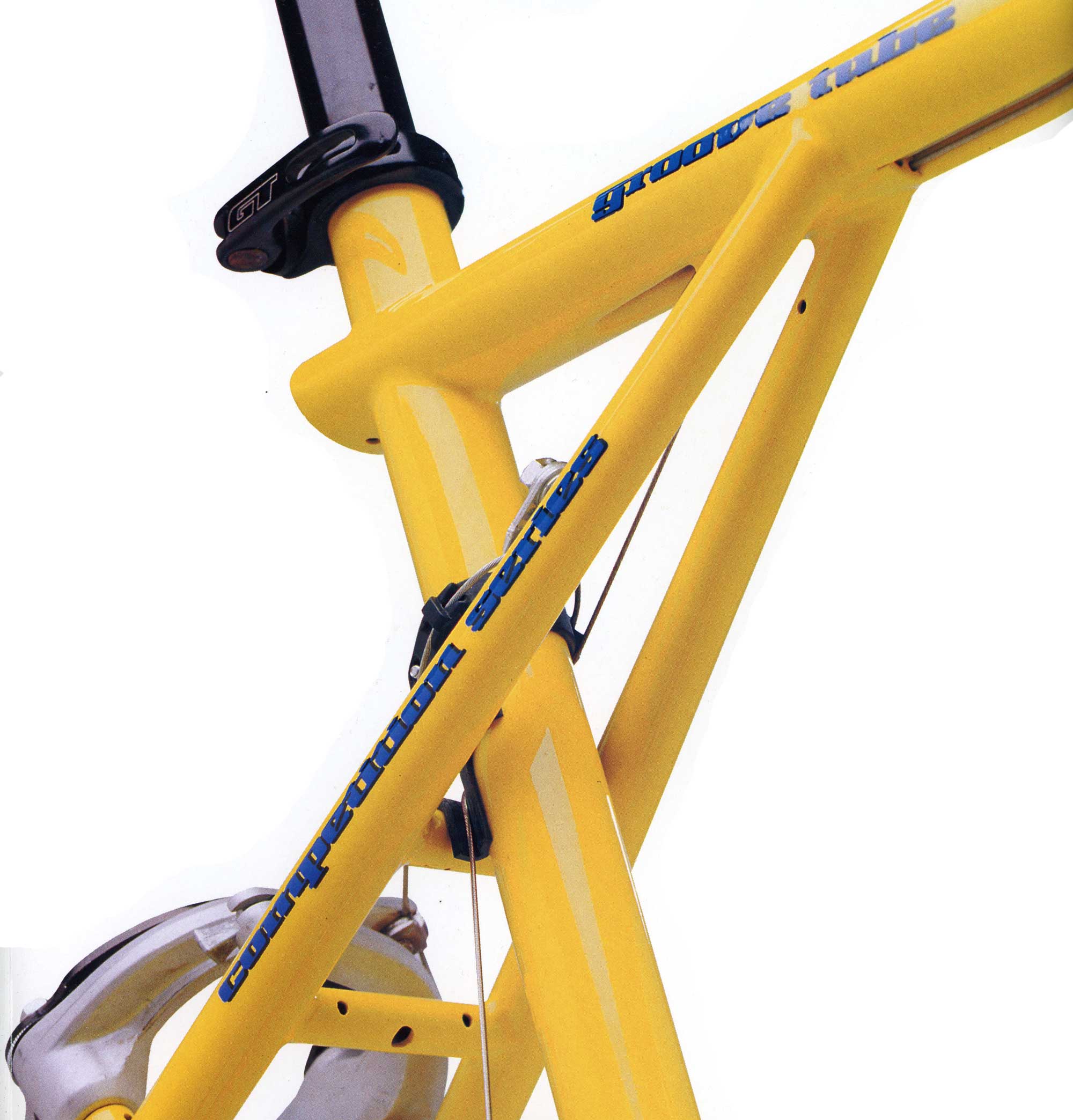
GT Bikes has consistently led the way in bicycle frame design, with the Groove Tube technology standing out as a hallmark of their innovative approach. This technology integrates a unique channel into the underside of the top tube, showcasing GT’s commitment to enhancing both functionality and aesthetics in cycling.
Design and Functionality: The Groove Tube is crafted to streamline the bike’s appearance while protecting the cables routed through it. This feature ensures that cables for brakes and gears are not only hidden from view but also shielded from environmental factors that can lead to wear and tear.
Durability and Sleek Aesthetics: By embedding the cables within the frame, the Groove Tube minimizes exposure to damaging elements, thereby extending the longevity of the bike’s components. The sleek integration also contributes to a cleaner and more refined overall bike profile.
Benefits Beyond Aesthetics: While the primary focus of the Groove Tube is on protection and aesthetics, this innovative feature also subtly improves the aerodynamics of the bicycle, offering an additional performance advantage.
As an exemplar of GT Bikes’ dedication to pioneering bicycle technology, the Groove Tube illustrates the brand’s ongoing pursuit of excellence. This technology reflects GT’s broader goal of advancing the cycling experience through thoughtful design and engineering.
Full Travel: GT's Suspension Development Story
Travel back to the beginning of full-suspension mountain bikes with some legendary personalities! 'Full Travel' is a documentary by Pipeline Digital Media which takes a look back at GT's history of pushing the progression of the sport!
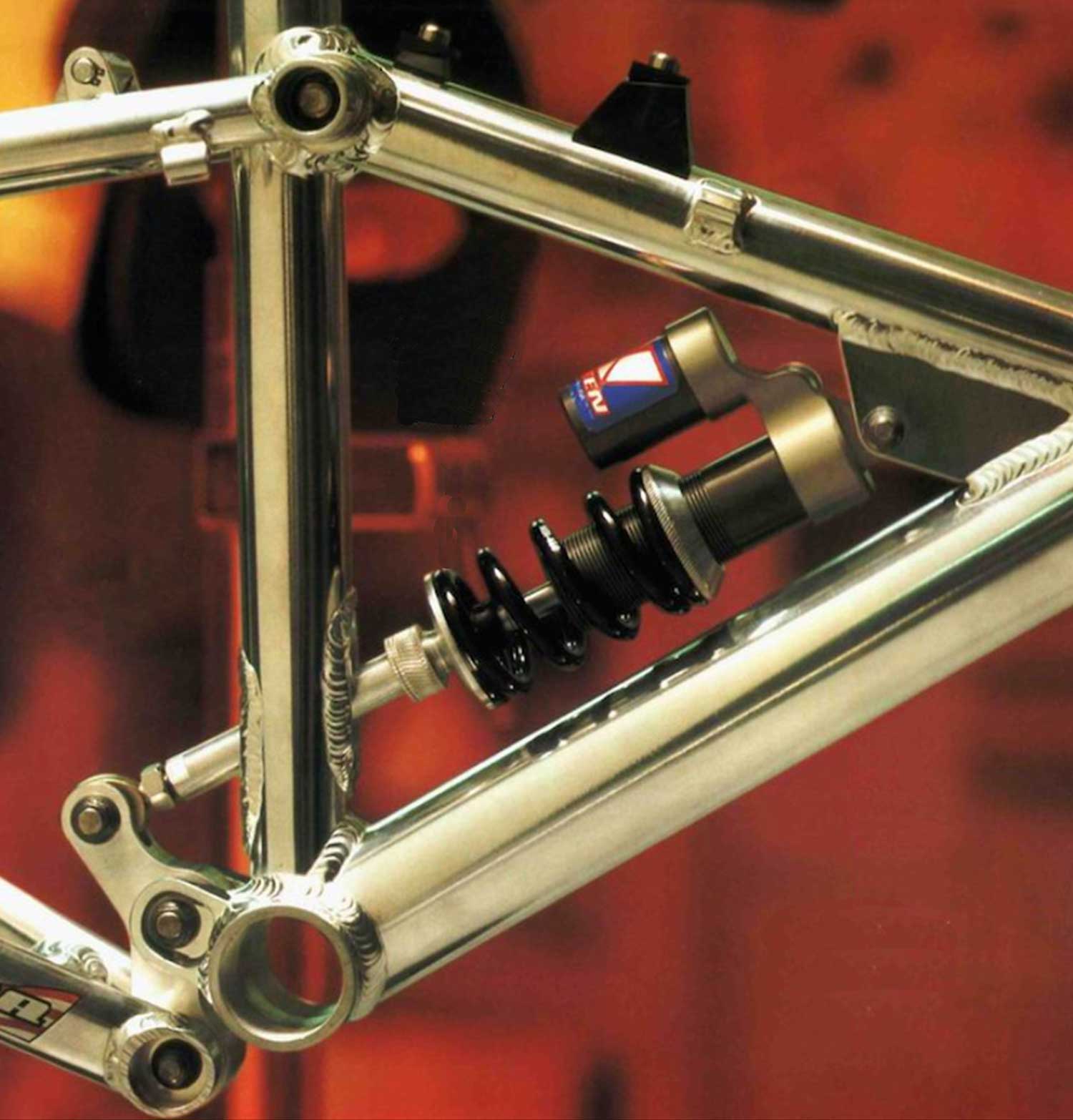
RTS - Rocker Tuned Suspension
GT‘s Rocker Tuned Suspension system gives you all the benefits of a rigid frame bicycle, with the added performance of full suspension. What makes it tip? A small CNC machine and aluminium rocker. Chassis stiffness must be a priority to properly constrain wheel movement, and the RTS has provided abundant stiffness with this application of race car technology. The suspension configuration of the rocker tune suspension system offers three distinct advantages: anti-squat, anti-dive, and full adjustability.
The anti-squat geometry allows the chain force to counteract the rearward weight transfer due to forward acceleration. It ensures the suspension stays topped out during normal riding, thus preventing energy loss, with none of the bobbing. So when you’re sprinting for the finish or climbing a technical section, you have optimum power transfer to the rear wheel.
During breaking, weight transfer tries to compress the front, as well as extending the rear suspension. By incorporating anti-dive geometry, the rear breaking forces actually compress the rear suspension, levelling out the bike. In addition, the lowered centre of gravity helps to reduce the weight transfer to the front, improving rear breaking. The brake rocker further improves the rear brakes, employing a special cam like function. With the idea that no rider is created equal, the RTS system is designed to have complete adjustability. The RTS can easily be tuned to fit each rider individual riding style, weight and handling preferences. In addition, the RTS systems USA made Noleen “Piggyback” oil dampened coil over shock has adjustable compression damping and spring preload. This allows you to fine tune the shock action for all types of terrain. The Rocker Tuned Suspension system, the worse it gets, the better it works.
STS - STRATOS TUNED SUSPENSION
The STS (Stratos Tuned Suspension) system was a major milestone in GT Bicycles' history, pushing the boundaries of mountain bike technology during the 1990s. This design built on GT’s reputation for innovation, delivering a full-suspension mountain bike that expertly balanced stiffness, weight, and ride quality. The STS was particularly notable for its advanced use of materials, combining a carbon fibre rear triangle with an aluminium front triangle. This hybrid construction took advantage of the distinct properties of each material—carbon fibre offered superior vibration damping and weight savings, while aluminium provided the necessary durability and stiffness.
At the heart of the STS design was its sophisticated suspension system, based on a four-bar linkage. This system was engineered to deliver a smooth and controlled ride over a wide range of terrains, enhancing both traction and handling. The four-bar linkage allowed for a more progressive suspension curve, meaning the suspension became firmer as it compressed. This design was highly effective at absorbing small bumps while providing increased resistance to larger impacts, thereby preventing the bike from bottoming out on rougher trails. Riders appreciated this setup for its ability to maintain consistent traction and control, whether navigating technical climbs or descending at high speed.
One of the standout features of the STS was its use of carbon fibre in the rear triangle. This was a significant innovation at the time, as carbon fibre's natural ability to dampen vibrations resulted in a smoother ride, particularly over rough terrain. This not only improved comfort by reducing trail chatter but also helped to minimise rider fatigue on longer rides, allowing for better control and sustained performance.
In addition to its innovative suspension kinematics, the STS was designed with both anti-squat and anti-dive characteristics. The anti-squat geometry counteracted the rearward weight transfer that typically occurs during acceleration, ensuring that power was efficiently transferred to the rear wheel without unnecessary compression of the suspension. Similarly, the anti-dive feature stabilised the bike during braking, maintaining consistent geometry and improving handling, especially on steep descents. These features made the STS highly effective in maintaining speed and control in challenging conditions.
The STS also offered a high level of adjustability, allowing riders to fine-tune the suspension to suit their individual riding style, weight, and the specific demands of different terrains. Central to this adjustability was the Noleen “Piggyback” oil-damped coil-over shock, a key component in GT’s suspension bikes. This shock featured adjustable compression damping and spring preload, enabling riders to optimise their bike’s performance across a variety of conditions, from smooth cross-country trails to rugged downhill sections.
Another critical element of the STS was its precisely engineered rocker link, which controlled the movement of the rear wheel. The rocker link, CNC machined to exacting standards, ensured consistent performance and durability. By guiding the rear wheel through a controlled arc, the rocker link helped maintain traction and minimise pedal feedback, which was essential for sustaining momentum and efficiency over rough terrain.
The STS was celebrated for its ability to deliver a balanced and controlled ride, effectively combining the best aspects of both hardtail and full-suspension designs. The smoothness and efficiency provided by the carbon rear triangle, along with the robustness of the aluminium front triangle, made the STS a favourite among serious mountain bikers. Its success highlighted GT’s commitment to pushing the boundaries of what was possible in mountain bike technology, reinforcing the brand’s reputation as a leader in innovation.
The impact of the STS extended beyond its immediate success, as it played a significant role in advancing the use of carbon fibre in mountain bike design. This pioneering work paved the way for more widespread adoption of composite materials in high-performance bikes, influencing the development of modern suspension systems. The STS remains a testament to GT’s engineering prowess, offering a ride that was smooth, precise, and capable of tackling the most challenging terrains with ease.

LTS - Links Tuned Suspension
LTS riders all over the world are making headlines winning National and World Cup races. GT champions Nicolas Vouilloz of France and Mike King of the United States stunned the competition at the season opening Cap d’Ali World Cup on their LTS, winning one-two by unheard of margins on the worlds most notorious course. Nicolas was over 15 seconds faster than third-place (the same time gap spanned the placings from third through twenty-fifth).
The secret to every LTS is in its aluminium alloy frame, the essence of which, is the rear suspension, a classic “four bar linkage” system with anti-squat geometry in which chain tension (from peddling) is used to counteract the “bio – pacing” forces that plague other designs. With the LTS, we have achieved optimum anti-squat (100%). This means that any weight transferred to the rear wheel by peddling is perfectly balanced by the lifting action of the anti-squat geometry. This balance is what eliminates bio-pacing and allows the LTS to be set up with significant droop travel (often called sag). Droop travel means the LTS can follow the terrain more accurately – extending with depressions as well as compressing over bumps – providing better traction than any other system.
All pivot points on the LTS are space age materials design for long life and low maintenance. The LTS is your mechanic dream: it has self aligning pivots and to simplify maintenance a bushing extractor is provided (with the LTS one and LTS2).
The Team LTS, LTS-1 and LTS-2 are fitted with the latest Rock Shox coil over oil rear shock absorbers. The LTS-3 features an elastomer rear shock. The Team LTS and LTS-1 feature of breakthrough design titanium link arm, while the LTS-2 features an aluminium alloy link arm.
The LTS-3 is totally new. Its purpose is to break the performance/price barrier for quality full suspension. The essential geometry is the same as the original LTS. The only difference lies in the necessary adaptions to optimise the installation and performance characteristics of the all-new, GT designed, double elastomer stack. This system provides remarkable performance, comparable to the original LTS.
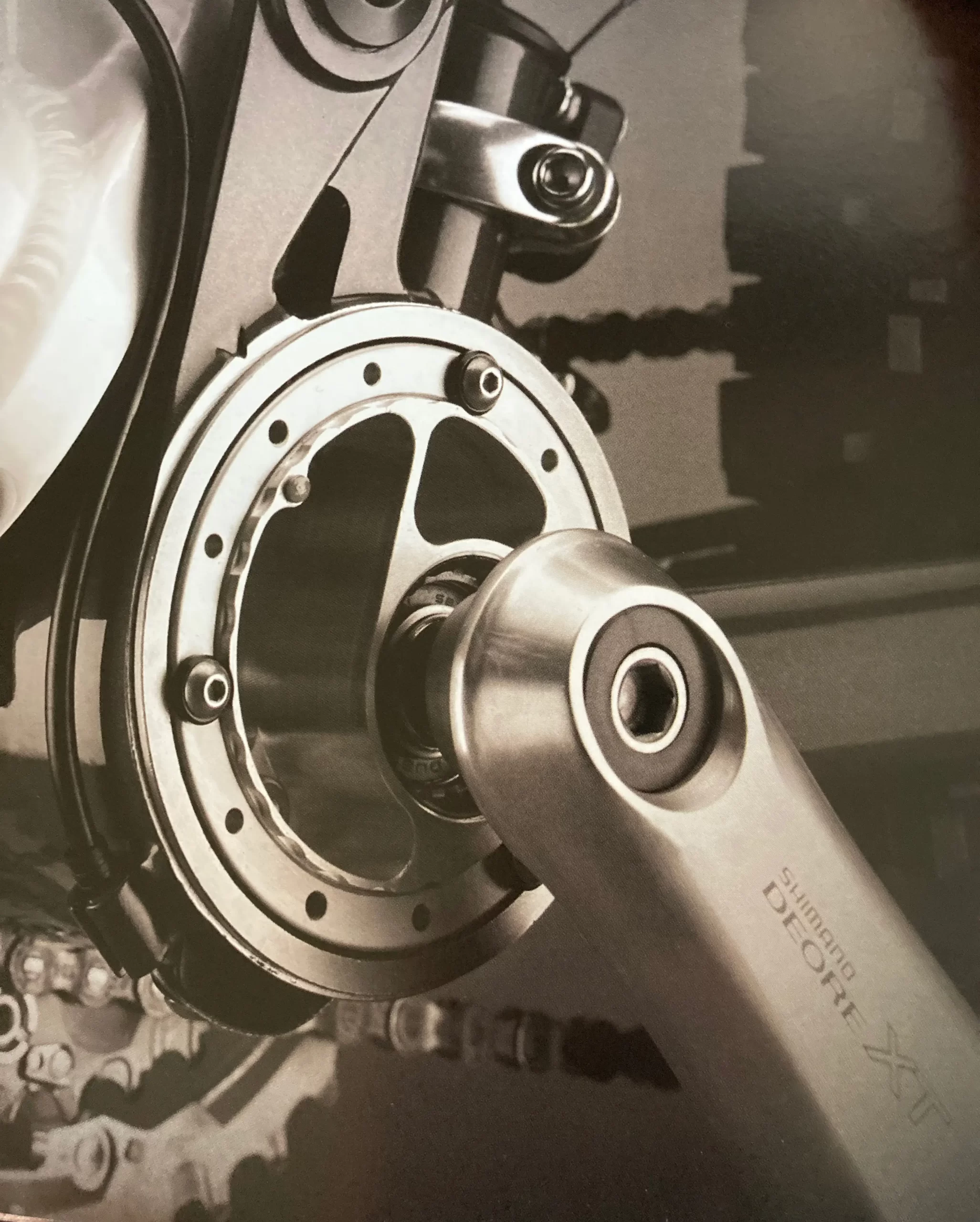
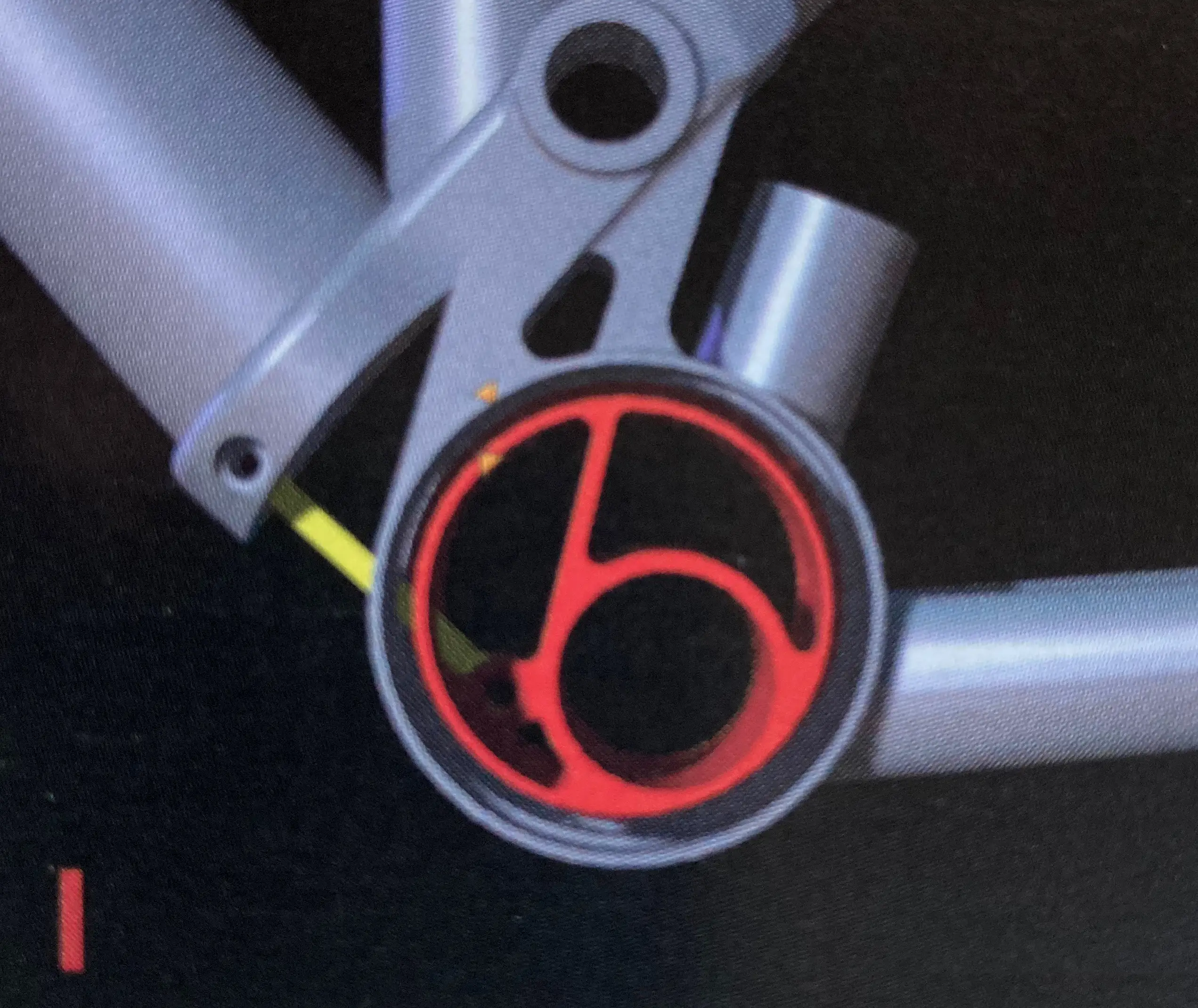
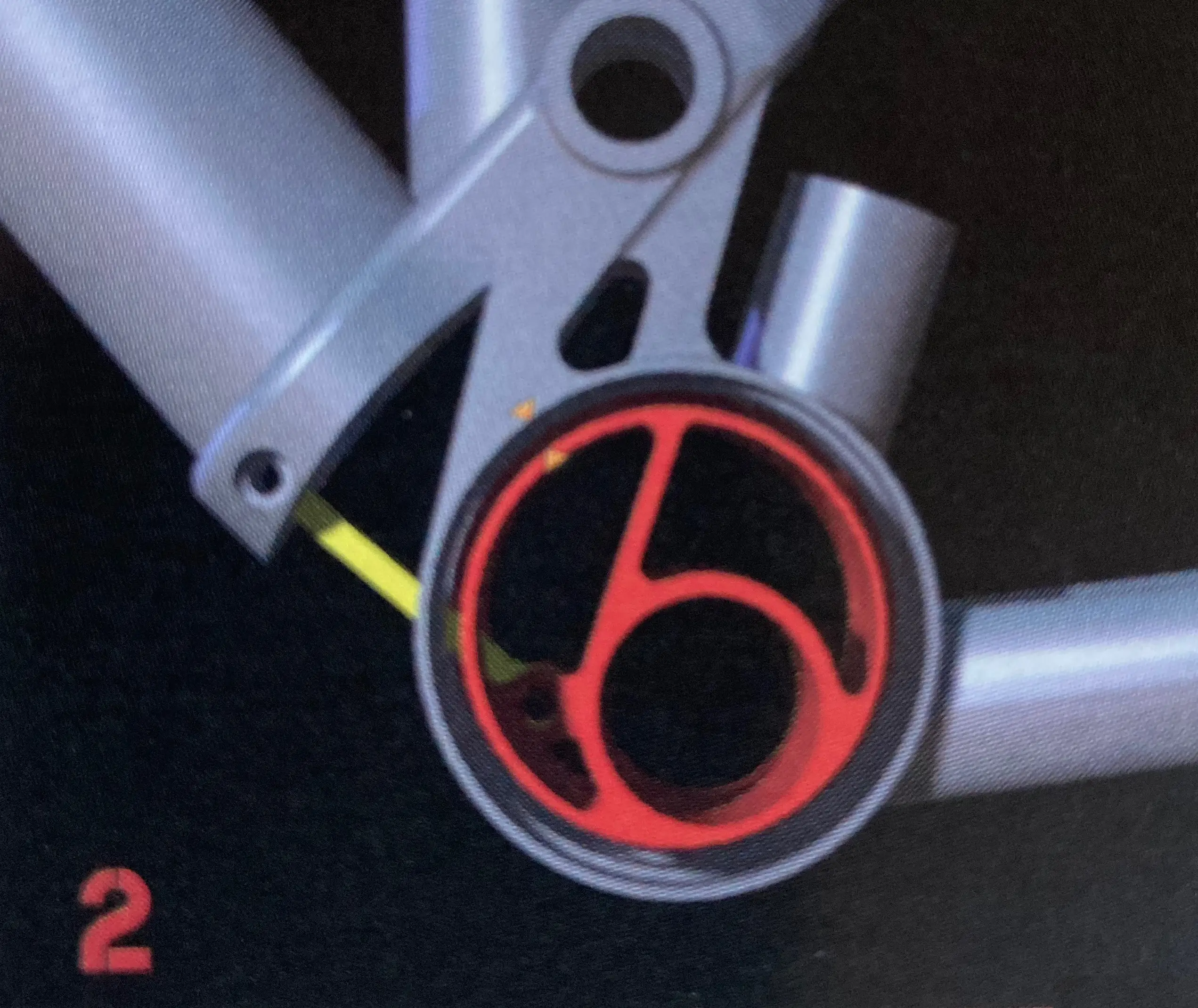
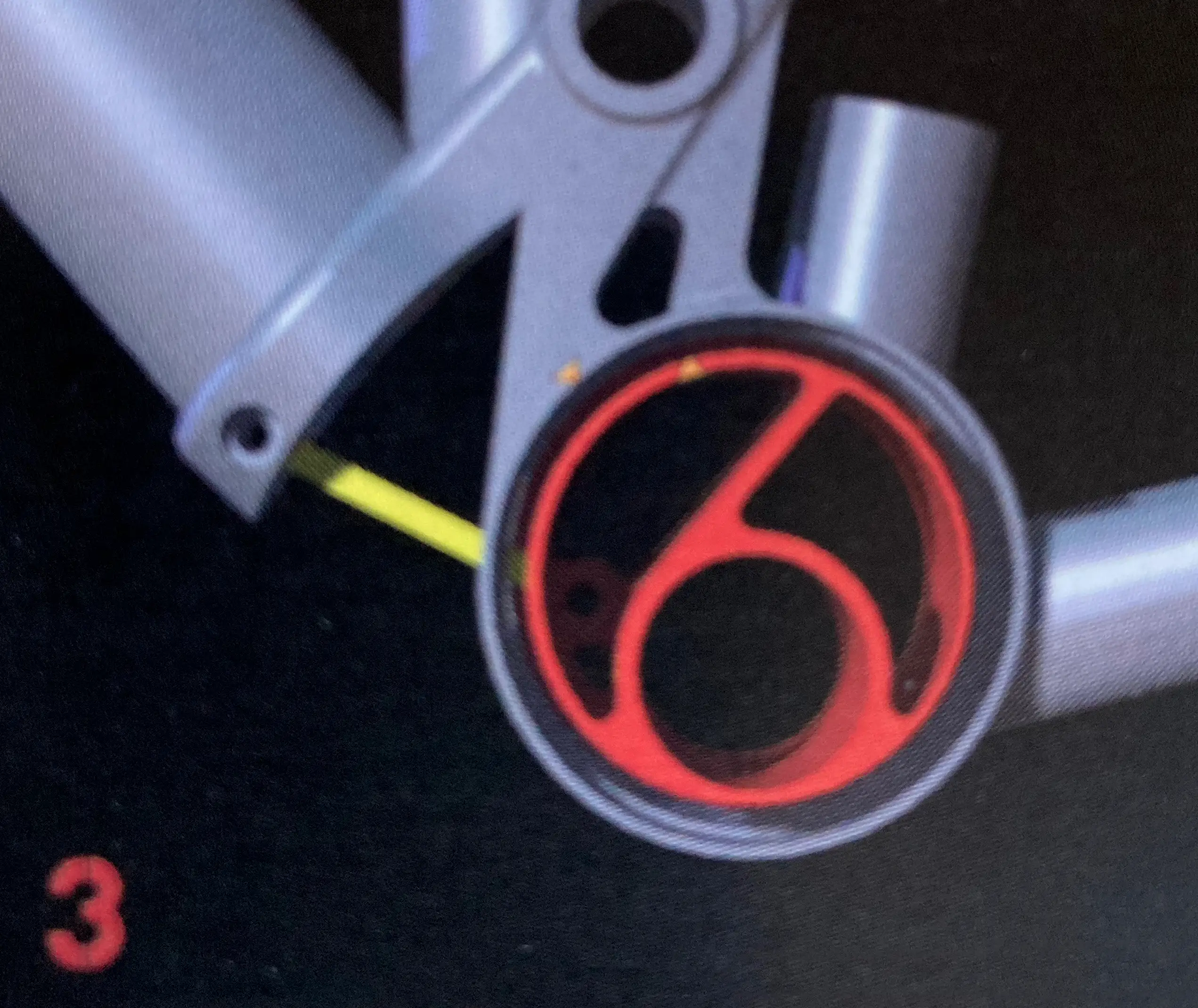
As the i-drive suspension moves through its travel, the dog bone rotates the eccentric down and forward, creating an incredibly smooth pedal stroke.
GT I-Drive
An independently suspended crankset sets the i-drive system apart from everything else. The resulting smooth, even pedal stroke insures that you’ll deliver power more efficiently than on any other bike.
The direct connection between the bottom bracket and the rear hub means no power can be lost through linkages. A single pivot delivers simplicity and low maintenance.
The Eccentric rotates on two extra-large sets of bearings compensating for the chain pull that normally robs the rider energy on any suspension bike with the cranks not mounted the swingarm.
The Perfect Preload feature takes the guess work out of tuning the suspension. Simply set the shock absorber so that the dot on the Eccentric lines up with the arrow on the frame when you are seated on the bike, and you can be sure you are getting 100% of the intended performance out of your bicycle’s suspension.
The Dogbone is the smartest piece of aluminium to ever appear on a bicycle; it tells the Eccentric what the swingarm and front triangle are doing, and where the bottom bracket needs to be for optimal pedaling efficiency.
Since the development of full-suspension mountain bikes, the industry has been challenged by the ever-pervasive problem of pedal-induced “bio-pacing,” a jerky, inch-worming “hobby horse” motion that can occur when pedaling a bike with an active suspension system. This disruption of the pedal stroke forces the rider to work harder to maintain a steady cadence. Only GT Bicycles has solved this problem. The solution is the ingenious i-drive system which independently suspends the crankset while maintaining a fully active ride.
Setting the
The GT i-drive enhanced four-bar link system isolates the pedaling motion completely from terrain and suspension induced input. The payoff is that a GT i-drive bicycle can be ridden one or sometimes even two gears higher than any other full-suspension bike on any given terrain. Hence, our motto: Every trail. Faster. The GT i-drive is also the easiest system ever devised for suspension setup. Most high-performance systems require advanced technical knowledge and training to properly adjust them. Setting the i-drive system is as easy as focusing a camera. You simply adjust the preload on the shock until the mark on the frame is aligned with a mark on the eccentric. This done, setup is perfect and you’re ready to go. We call it Perfect Preload. Finally, i-drive is a true “soul-rider’s” bike. It will inspire you to ride longer and further. It has
two water-bottle mounts and a low stand-over height. It’s also light weight, requires very little maintenance and it’s easy to portage. As a bonus, all XCR frames are configured to make it virtually impossible for the chain to fall off on the inboard side.