FRAME MATERIALS
Many thanks to Kevin Sande at Seeing is Believing Museum for his insight and expertise in providing the below information.
GT has utilized frame tubing from most of the worlds best tubing manufacturers over the years in it’s frame construction. From tubing manufacturers like Tange, True Temper, Reynolds and Excell on steel frames. Alcoa and Easton for aluminium frames and Sandvik for Titanium frames.

Aluminium
GT’s flagship model has always been the ever popular Zaskar. First introduced in 1991 as a frame set. The Zaskar is the only bicycle frame to have been ridden to UCI World championship titles in Trials, Cross Country, Downhill, Dual Slalom and 4X.
In 1992 GT had four complete aluminium models as the entire bike industry was beginning a shift to aluminium framed bikes, in an attempt, to drop weight. 1992 GT models with aluminium frames included the Zaskar and 1st year Zaskar LE (XTR equipped) both constructed out of ALCOA 6061-T6 Heat Treat tubing. The first GT aluminium model constructed in Taiwan from 7005 Tubing the Pantera and the Cirque Cross Bike.
In 1993 there was a huge shift to Aluminium and Full Suspension. In 1993 GT stopped producing the Avalanche in steel and added the Avalanche AL to the Pantera as their aluminium hardtail Line-up with and introduced the RTS 1 and 2 models to their lineup, as full suspension models with each having an aluminium main triangle and Chromoly rear stays. GT continued using Alcoa 6061-T6 on USA produced models and 7005 series tubing on the Taiwan built models.
In 1995 GT’s Zaskar/LE flag ship hardtails along with the Team RTS, RTS-1. Team LTS and LTS-1 saw the introduction of double butted aluminium tube sets to further reduce the weight of their top-of-the-line frames. The main tubes also saw the introduction of Dual-Oval down tubes allowing for larger weld surfaces to enhance strength and ride characteristics. The Ricochet and Tempest hardtail models and LTS, LTS-1 were also added to the GT line-up in 1995. Upping the 1995 to 12 aluminium models.
The 1998 Model year saw the introduction of a new tube set offering with the Introduction of Easton Pro-Gram 6061-T6 butted aluminium main tubes and stays on the Zaskar LE model. GT also featured machined seat tubes with integrated seat clamps on the four Zaskar and Avalanche model offerings.
GT Aluminium Tubing
- Alcoa 6061 T-6 1991-1994 USA made models
- Alcoa 6061 T-6 Double Butted Aluminium 1995-99 USA made models
- 7005 Series – Most Taiwan made models from 1992-99
- Easton Pro-Gram started in US production in 1998
Steel
Entry Level Models
Many of GT’s entry level models were constructed of 1020 Hi tensile steel sometimes coupled with a 4130 Chromoly seat tube. Many manufactures did this so they could put a Chromoly tubing decal on the seat tube and give appearance that the whole bike was Chromoly.
GT model frames constructed this way included the Outpost and Talera, Outpost Trail and later the Palomar.
Mid Level Models
Many manufacturers, GT among them also touted Chromoly Main tubes meaning the Head Tube, Down Tube, Top Tube and Seat Tube yet utilized Hi-Tensile steel on the rear stays. These tube sets were typically Plain Gauge Chromoly having the same wall thickness throughout the tube and these tubes were usually seamed tubing.
GT model frames constructed this way included the Talera, Timberline and Tequesta some years.
Upper Level Models
Most of GT’s Mid and Upper Level Models were constructed of Double Butted Chromoly Tubing, having either seamed and seamless tubing. Butted Tubing utilizes a thicker wall thickness nearest to the welds. Butted tubes are drawn to a narrower wall thickness in the middle to reduce weight. These tube sets included Tange Infinity, Tange MTB Double Butted, Tange Prestige, Tange Prestige Concept, True Temper AVR, True Temper GTX (Groove Tube frames), True Temper OX Gold and Platinum, Reynolds 631 and Reynolds 853.
GT model frames constructed of these tube sets included the Tequesta, Karakoram, Borrego, Corrado, Richter 8.0, Ricochet, Bravado, Bravado LE, Avalanche, Team Avalanche, Cyclone, Psyclone and Quatrefoil/LE.
Some of these frames were constructed a mix of tube sets using an individual tube to enhance the ride characteristics or added strength where needed most.
Titanium
Titanium has long been prized in cycling for its exceptional strength-to-weight ratio, durability, and smooth ride quality. GT Bicycles, known for innovation and high performance, embraced titanium in their iconic Xizang model, making it a key part of the brand’s legacy.
The first Xizang frames featured a titanium front triangle paired with a chromoly rear triangle, crafted by La Vaue, a small builder near Whistler, Canada. This early version combined the lightness of titanium with the durability of chromoly, setting a high standard for performance.
As demand grew, GT partnered with Sandvik, later known as Titanium Sports Technologies (TST), to produce fully titanium Xizang frames using 3AL/2.5V titanium. These frames were known for their durability, fatigue resistance, and the smooth, compliant ride characteristic of titanium, solidifying the Xizang’s reputation as a top-tier mountain bike.
In the third generation, GT brought production in-house to their Tech Shop in Colorado. This move allowed GT to refine the design further and maintain strict quality control. The result was a frame that not only performed at the highest level but also became a sought-after collector’s item due to its craftsmanship and rarity.
The Xizang remains one of the most iconic models in GT’s history, demonstrating titanium’s advantages over traditional materials like steel and aluminium. The success of the Xizang influenced GT’s approach to other high-performance materials and designs, leaving a lasting impact on the cycling world. Today, titanium Xizang frames are highly prized by collectors, symbolising GT’s dedication to innovation and excellence in mountain biking.
Composite Materials
GT is the only bicycle company that has been able to maintain the integrity of a single continuous carbon weave completely around the frame. All others are forced to interrupt the weave at some point, compromising the inherent strength of the material. The Single Tube System can only be found on a GT bike.
GT uses a thermoplastic resin composite structure on its carbon frames, This uncommon composite is tougher than most carbon frames, resisting impacts and dents better, while damping vibration better than metal frames. The natural carbon finish can’t rust or chip like paint, and is virtually maintenance free.
The carbon composite used on the 1999 GT STS frames is very high strength and high stiffness, with a 44 million psi modulus.
GT’s industry-leading proprietary bladder technology has allowed for improved control of the wall thickness of the
composite during manufacturing, resulting in less weight and improved strength.
Even without the advanced technology that goes into the GT STS carbon fiber frame, it would still be the best carbon mountain bike on the market for one reason alone: It’s got i-drive!
GT’s patented Single Tube System (STS™) is the only carbon fiber technology on the market that creates a completely seamless frame. The advantage is in the structural integrity that comes from a one-piece form. Typical carbon fiber frame construction features separate parts that are either glued or bolted together. GT’s exclusive (and patented) STS process assures the best quality and highest strength. STS technology not only means greater strength, it also allows GT’s designers to fine tune the way the frame responds to the riders peddling forces and high speed, high performance riding. Using sophisticated software and test equipment, GT engineers have designed the carbon weave in the STS to create a frame that is both extremely stiff when pedaling, yet responsive like the finest aluminium frames. And because STS incorporates a
nylon matrix into the mix, the frame is tougher than other carbon fiber frames, resisting impacts, never denting, and always looking great with a simple wipe down.

Tange
The frame design determines the performance of the bicycle. And the tubing determines the performance of the frame. Sixty years of accumulated expertise in the development of bicycle tubing stands behind each Tange frame tube system. Tange now offers many new and advanced frame tube systems that are setting new standards for the cycling world. When you ride Tange, you’re riding a frame with a pedigree.
Tange Prestige Tubing
Prestige is a high grade chrome molybdenum tubing which is subjected to a special Tange heat treating process. The result is a very high-strength tube for performance orientated bicycles.
Tange Oversized Tubing
Large outside diameter of Tange Oversize provides significant increase in strength with a minimal weight increase. Tange Oversize makes a more rigid and efficient frame.
Tange Taper-Butted Tubing
Tange Prestige OS mountain bike tubing features double butted construction. The difference is that one butt utilises a tapered design in which the wall thickness of the butt itself tapers toward the centre of the tube. A stronger joint is realised from a very lightweight tube.

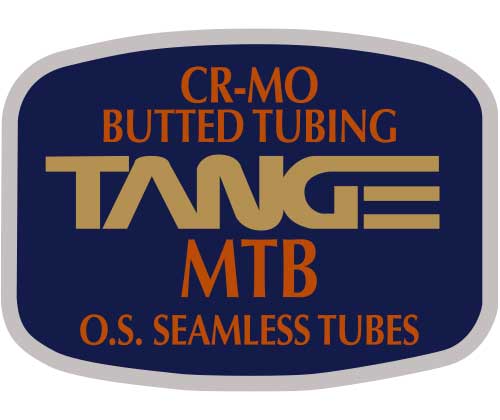
Tange MTB
Seamless double butted Cr-Mo tube for the quality mountain bike.
Tange OS MTB
Seamless oversize Cr-Mo tubing which has a larger outside diameter without excess weight.
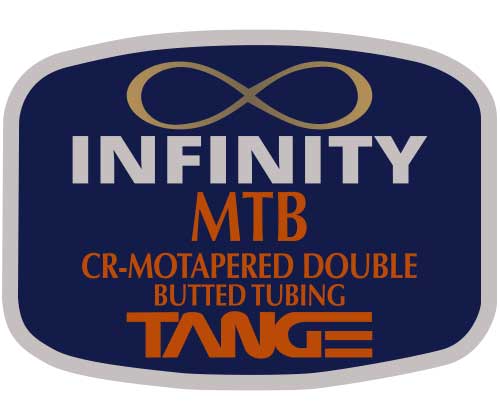
Tange Infinity MTB
Smooth tapered double butted tubes for the MTB. Advanced seamed construction.

Tange Prestige OS MTB
Prestige double butted seamless MTB tubing with oversize outside diameter. Large but lean….it only looks fat.
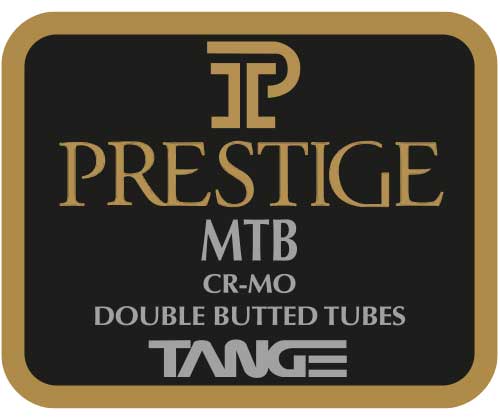
Tange Prestige MTB
Special heat treated seamless double butted Cr-Mo tubes for the competition level MTB.
Tange Prestige Concept MTB
Distinctively flared tubes of tapered double butted Cr-Mo for the finest mountain bikes.
GT Road Bike Frames
GT announced their entry into the Road bike market in mid 1993 with the announcement that GT had formed the partnership “Project 96” with the US Cycling Federation along with sponsors EDS, Mavic. This partnership was advanced as an effort to produce the best bicycles possible for the USCF athletes as they trained for the upcoming Olympic Summer Games in Atlanta. These bikes were produced at GT’s Tech Shop in Longmont Colorado led by Forrest Yelverton and a talented team of welders including Dave Tiemeyer, Mark Nobilette, Nalby Varoqua, Dave Norton and Jason Hamburg.
GT Introduced their first road models at Interbike in the fall of 1993 for the 1994 model year.
The line featured Edge frame sets and complete bikes in Excell Superlight steel, Chromoly, Alcoa 6061 T-6 Aluminium and Sandvik 3AL/2.5V Titanium. The 94 line consisted of the Edge, Fury, Rage, Force and Strike models
The Edge models and Fury were produced in the US and the Rage, Force aluminium models and Strike chromoly model were produced in Taiwan.
In 1994-5 GT also sponsored the Shaklee Continental team that rode GT Edge steel frames of fillet brazed Excell Superlight tubing. One of the lightest steel frames ever produced. They would also partner with Eddie B and supply the Edge Ti frames to the Montgomery Bell team.
GT would go on to add aero road models in 1996 with the Fury and in 1997 with the Edge Aero and Vengeance triathlon models. 1997 also saw the introduction of the GT Pulse 7005 aluminium track frame.
In 1997 GT also entered into an agreement to supply Tom Schuler’s Saturn Team with Reynolds 853 road frames and 6061 T-6 Time trial frames. Ti frames were also added to the Saturn team fleet for the 1998 model year. 1998 also saw GT’s entry into a new genre with the introduction of the Edge CX Reynolds 853 frame entry into the Cyclocross market segment. Edge CX’s were ridden to both National Championship titles that year by Saturn riders and Alison Dunlap.
In 1999 GT signed with Adecco Lotto to supply the Lotto ZR (Zaskar Road) aluminium model frames. Thus, marking GT’s introduction to the UCI world tour stage and into the Tour de France for the first time. Andrei Tchmil would eventually pilot his Lotto ZR bike to the title of World Cup Champion.
Acknowledgements
Many thanks to Kevin Sande at Seeing is Believing Museum for his insight and expertise in providing the above information.