
Hans Rey
Name:
Hans Rey
Nickname:
No Way Rey
Year you joined Team GT:
1987
Favourite GT year & model:
1992 Zaskar LE
Favourite Rider:
You
Favourite year team kit:
1992
If you had to ride a descent on a GT Quatrefoil (Tandem) with someone from your time at GT would you have with you & why?
Dave Wonderly, he is a strong peddler and can handle a bike.
Have you ever pulled a prank on someone or had one pulled on you while riding at GT?
Lots of funny stories and memories. There were some rumours about the infamous Start /Finish banner from the first ever MTB World Championships in Durango was taken apparently by some GT riders? As mysterious as it disappeared as mysterious it resurfaced over 20 years later in France at a Vintage MTB event. Its all a bit fuzzy, perhaps it was just a dream 😉
Can you tell us about your experience racing or riding mountain bikes for GT Bicycles in the 90’s?
The 90ties was when the boom started, racing flourished and everybody had a great time, partly because most of us didn’t have expectations. New things would happen all the time, new riders, new riding technique, new brands, inventions, events, etc…..GT had lots of race background in their BMX roots, when mountain biking took off, they didn’t just invest in some of the best riders from various disciplines, but they also supported the team with proper race support, mechanics, big trucks and even semis and everything was done right. The sport exploded and with it GT. They invested in better bikes and technology and they would market the team, the riders and of course the bikes. It was always prestigious to be part of our team, we always had some big names that would regularly be representing on the podiums, in the media and in ads.
What was your favourite event or race that you competed in during that time period and why?
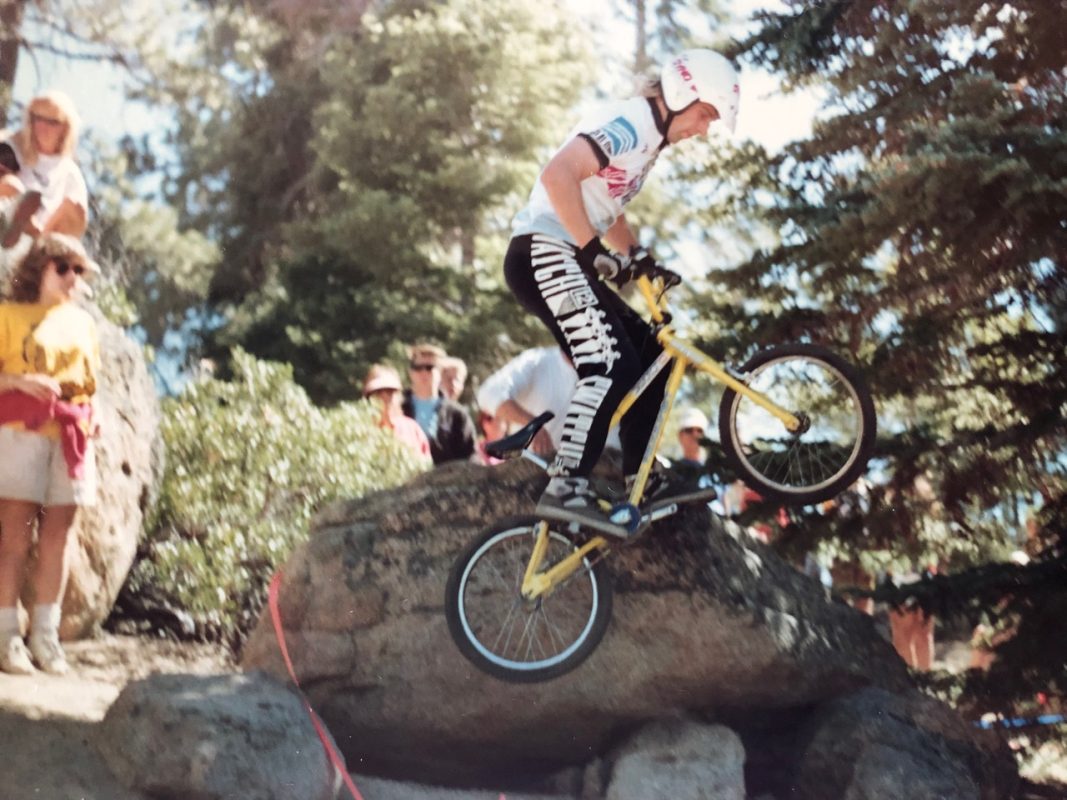
Mammoth was always a big show and big platform for everybody. We had some legendary trials events there, and many international riders would show up. The crowd used to love hanging out on the lawn where the trials course was set up and watch the riders. But all the other disciplines were celebrated there as well, from the Kamakaze downhill to the legendary dual slaloms or bunny hop contests.
Can you share a memorable moment or story from your time racing or riding for GT Bicycles?
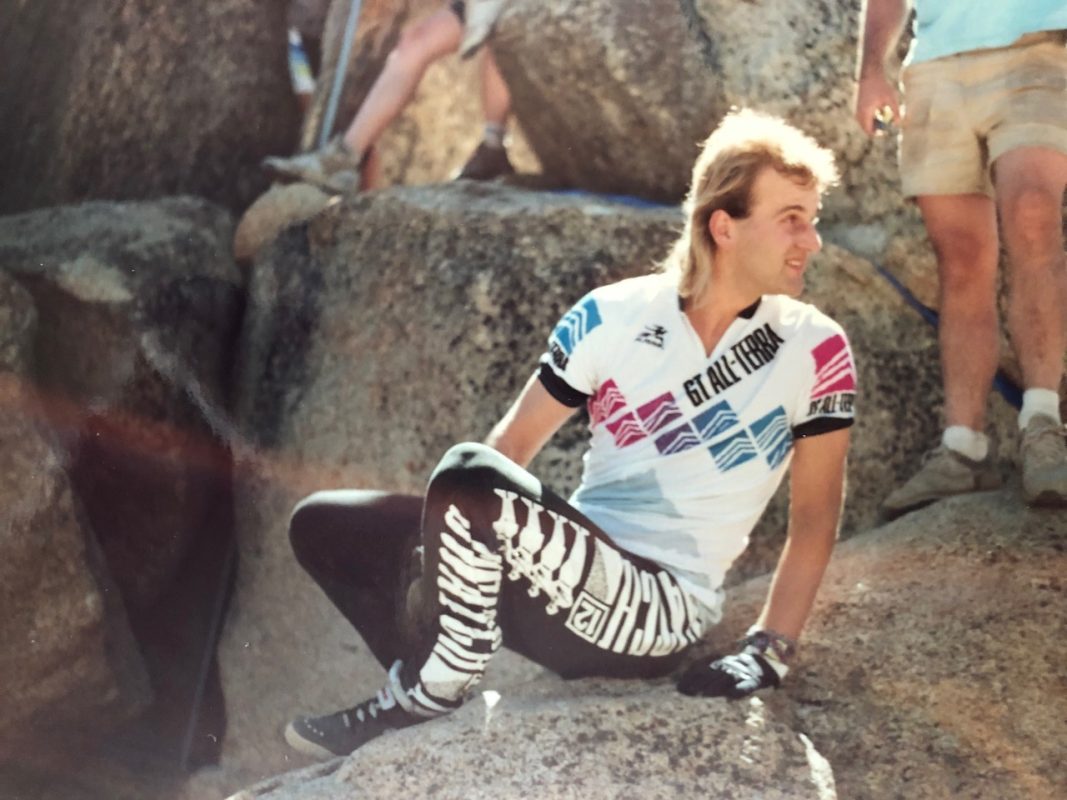
The Worlds in ’93 in Metabief, France were a big occasion for me. I did a few trials shows everyday, on top I competed in the Stock Bike Trials and won, beating my old rival from the 80ties, Thierry Girard. I also competed in the Slalom, and ended up with the Bronze medal. I think I also tried to qualify for the DH. At the time we had many fast GT riders in the Slalom, many BMXers, guys like Cully, Geoff Scofield, Jimmy Kight, and a few more. They were all eliminated one by one and I kept advancing to the semi finals. At one point our team manager Doug Martin, got rather annoyed, because him and all the eliminated riders wanted to leave for dinner, but since I kept advancing they had to stick around. Eventually I raced Lopes in the semis, there was a small 1ft drop about 4 gates into the course, Lopes wanted to 360 off it, so I agreed we would not start racing until after that drop…….Lopes ended up winning the whole thing. I used to do quite a few slaloms back in those days, but usually wouldn’t make on the podium.
How did you first get involved with GT Bicycles, and what made you choose to race or ride for the brand?
Kevin Norton was the US National Trials Champion who invited me to come to America, I owe him everything. He introduced me to Penny Westman who worked at GT, and she convinced Richard and Gary that they needed to sponsor a trials rider. This was in April ’87. Right around that time Bill Duehring had started at GT to build the adult ATB line. They were about to sign Richi Grewal, the two of us were the beginning of Team GT. Shortly after Toby Henderson came on and then Dave Wonderly. Before that, when GT first made a ATB in 1985 they sponsored Dave Mott, who would race for them in the early days, and later raced for GT’s sub brand ‘Mount Shasta Bicycles’.
At the time Kevin Norton was sponsored by Haro. His dream was to make Trials Riding big in America. The early mountain bike stage races always included a Trials comp, and Kevin wanted to get some other big brands behind the sport. GT was it, and they liked the idea.
What was the mountain bike racing or riding scene like in the 90’s compared to today?
Everything was more touchable and everybody knew each other, nowadays the sport has gotten so big we have so many sub-cultures and so many events. We were lucky to be there and get the support from the industry. There was some serious money there and we could experience the right time or the golden age, probably not so different from the days when rock n’ roll first exploded. Nobody could have imagined how big and popular mountain biking would get and how the technology kept evolving.
Can you describe the technology and equipment used for mountain biking during the 90’s, and how it has changed over time?
It is hard to imagine to ride bikes with no suspension, skinny tires made from horrible rubber compounds, cantilever rim brakes that wouldn’t work well under many conditions, but we still had fun and sometimes I wonder how we rode some of the trails we did, especially since many of the trails are still around and are still considered gnarly by todays standards and todays highly advanced bikes. There was a lot of trial and error, new inventions that wouldn’t go anywhere or we were led to believe they were good, or we just didn’t know any better. But slowly but surely we could advance technology and also convince people that some of these inventions where actually better and were the future. Not everybody believed at first we needed suspension or disc brakes, dropper posts, etc…..people were skeptical.
How did you see the sport of mountain biking evolving during the 90’s, and how did GT Bicycles play a role in that evolution?
GT played a big role, we were the number one team and we were also the number one bike company. GT pioneered many trends and technology. The Zaskar was the ultimate do it all bike (but first we had to learn everything about welding and heatreating aluminum. We had learn about titanium, we had Jim Busby who figured full suspension out for us, which led to the RTS and LTS. The RTS was the first full suspension production bike that actually worked. All the other fullies out there were either pogosticks or hardtails w some cushioning that didn’t work and were heavy.
GT also helped the sport evolve by sponsoring events, federations and develop better bikes and generate more main stream exposure for the sport. They took the bull by the horns – Richard had a vision and racing was a big part of it.
Can you tell us about some of the biggest achievements or milestones in your racing or riding career while with GT Bicycles?
Well there is the competition side, I won my share of world and national titles, mainly in trials, but also raced some Slalom and DH. Other highlights and milestones where my early videos and film appeareances, be it in Willy Bogners ‘Fire, Ice and Dynamite” motion picture w Roger Moore, Pacific Blue, performing at the Olympic Closing Ceremonies in Atlanta, first ever X Games and the built up, traveling the world, pioneering freeride and adventure and tourism on various levels.
What was it like to be a part of the GT Bicycles racing or riding team in the 90’s, and how did the team dynamics influence your performance?
It was all a bit of a whirlwind, sometimes we didn’t realize what hit us all, there was one thing after another, I was constantly travelling, but I was always a bit of the outsider in the team, racing was mainly about XC and DH, trials was a popular spectator sport and the media loved it, but the race results were less important. Richard did see the value in what I was doing, but not every team manager cared as much. I was often on my own schedule, doing lots of trials shows at all sorts of occasions all over the world often with our BMX Feestye team and skateboarders. Then there were lots of photoshoots and I was still competing in trials competitions which required a lot of training. I was also constantly thinking about going back to Germany and go to school/uni, nobody thought riding would become a lasting career.
Can your tell us about the progression from the Ricochet, Team Trials and then to the Zaskar and what input you had the the three models development?
When I first started w GT in 1987, mountain biking had not blown up yet, everybody was wondering what could be the next boom sport, after BMX and skateboarding. Some people speculated that it could be 20 inch trials riding (Modified bikes), that’s when GT invested in building the Ricochet with me. It was all my input. Shortly after 20 inch bikes market collapsed and 26inch bikes took over. Dave Wonderly was the main test rider behind the Zaskar, I did have some input and tested some versions, but my role became to be the posterchild for that bike.
How do you think you’re time racing or riding for GT Bicycles in the 90’s has impacted your life and career, and what advice would you give to aspiring mountain bikers today?
It has changed and impacted everything, I would have probably returned back to Germany after my first visit in the Spring ’87, if I wouldn’t have received sponsorship from GT and also Swatch. That opened the door to everything that happened after. The biggest game changer for me was my first video, ‘Hans No Way Rey’, it impacted a generation of riders, but most of all me and my life. It was Richard Long’s idea, one day he told me how hard it was to explain to people what I could do on my bike, he suggested we should do perhaps one of these videos ….. and the rest is history.
What made the biggest impact on you while at GT Bicycles which you rely on today?
I think those videos, as I described above, the first one was followed by ‘Level Vibes’, then I was co-starring in first proper MTB film ‘Tread’, before we produced classics like ‘Monkey See – Monkey Do’ and ‘BigFive’. Those were the VHS days and the beginning of creating content, long before the internet or social media.